Jamaican Food Centennial: Where History Meets Hospitality
A centennial celebration invites two kinds of memory. One looks backward and asks what has endured. The other looks around the room and notices who showed up, who cooked, who served, who told the old stories one more time before the plates were cleared. That is why a serious look at a Jamaican food centennial cannot stop at recipes alone. Food in Jamaica has never been just sustenance, and it has never been merely performance for visitors. It is archive, business, diplomacy, family language, and a public expression of care.
The phrase “jamaican food centennial” carries a certain ceremonial weight, but the real substance lies in the details. It lies in the pimento smoke rising from a jerk pan at daybreak. It lies in the woman at a market stall who can tell, by scent alone, whether a breadfruit is ready to roast. It lies in the Sunday table where rice and peas, stewed chicken, fried plantain, and callaloo arrive not as separate attractions but as a complete social arrangement. Hospitality in Jamaica has always been fed before it is described. Guests are welcomed with something hot, something cool, something sweet, and often a conversation that runs longer than anyone planned.
Any centennial worth honoring should make room for that reality. It should recognize that Jamaican food became iconic not because it was polished into uniformity, but because it remained expressive. It kept its accents. It held onto local habits, regional variations, and a deep respect for ingredients that grow well in island conditions. Even today, the best meals are often the ones least interested in spectacle. A carefully seasoned pot of red peas soup can reveal more about Jamaican values than a dozen glamorous tasting menus.
A cuisine built from movement, adaptation, and stubborn memory
Jamaican cuisine did not emerge from one source, and no honest account should pretend otherwise. It is a layered food culture shaped by Indigenous knowledge, African foodways, European colonial influence, Indian indentured labor, Chinese migration, Middle Eastern trading networks, and the practical improvisation of generations who made abundance from uneven conditions. This is not a tidy fusion story. It is a history of encounter, coercion, survival, and invention, all of which left traces in the kitchen.
African influence sits at the center of that story, especially in methods of seasoning, one-pot cooking, the use of ground provisions, and the resourceful treatment of every edible part of an ingredient. That resourcefulness is often misunderstood by people who only know Jamaican food through restaurant shorthand. They know jerk and patties, perhaps a rum cake at Christmas, but they miss the discipline behind the cuisine. A proper rundown, a pepper pot, or a pot of mannish water depends on judgment that is learned over years, not on trend-driven creativity. Heat must be managed. Texture matters. Timing matters even more.
Colonial trade also changed the pantry. Saltfish became foundational because preserved cod traveled well and held up in trade routes. Today ackee and saltfish is treated, rightly, as a national dish, but its history reminds us that Jamaican food often turns historical burden into culinary identity. The same pattern appears elsewhere. Sugar transformed land use and labor systems. Bananas, coconuts, and citrus shaped regional economies. Spices became both crop and signature. Food in Jamaica is inseparable from those material realities.
A centennial lens helps because it stretches attention beyond novelty. It asks what kitchens, communities, and businesses have sustained over a hundred years or so, through migration, tourism, storms, inflation, changing export markets, and shifting ideas of what counts as “authentic.” The answer is not one dish. It is a way of cooking that remains anchored in taste, seasonality, and generosity.
Hospitality starts long before the plate arrives
In Jamaica, hospitality often begins with anticipation rather than service choreography. Someone asks if you have eaten. Someone else puts the kettle on. A child is sent to fetch bread, ice, or scallion from the shop. A cooler appears. Music may drift in from another room or from the lane outside. Before the meal becomes visible, care is already in motion.
That distinction matters because hospitality in Jamaican food culture is active, not decorative. It does not depend on polished formality. In fact, some of the most memorable acts of hospitality happen in settings that would never call themselves “hospitality venues.” A cookshop in a busy town center, a roadside jerk stand under zinc roofing, a seaside fish fry with plastic chairs and uneven lighting, a family yard on a Sunday afternoon, all can deliver a quality of welcome that many luxury operations struggle to reproduce.
The difference usually comes down to sincerity and attention. A good host notices appetite, heat tolerance, pace, and mood. They know when to press another dumpling on you and when to let the conversation breathe. They do not flatten the guest experience into one standard script. This is one reason Jamaican food service, at its best, feels personal even in crowded settings. The best operators know their regulars, remember preferences, and treat familiarity as a form of respect rather than mere efficiency.
That warmth should not be romanticized into invisibility. Hospitality is labor. It is planning, buying, cleaning, marinating, stirring, carrying, remembering, and repeating. Women, especially, have carried a great deal of that labor across generations, often without the credit given to male chefs who later become public faces of the cuisine. A centennial celebration should correct for that imbalance. If we talk about Jamaican culinary heritage, we must talk about the mothers, grandmothers, market women, bakers, street vendors, and kitchen workers who preserved it under economic pressure and social strain.
The dishes that carry the public imagination
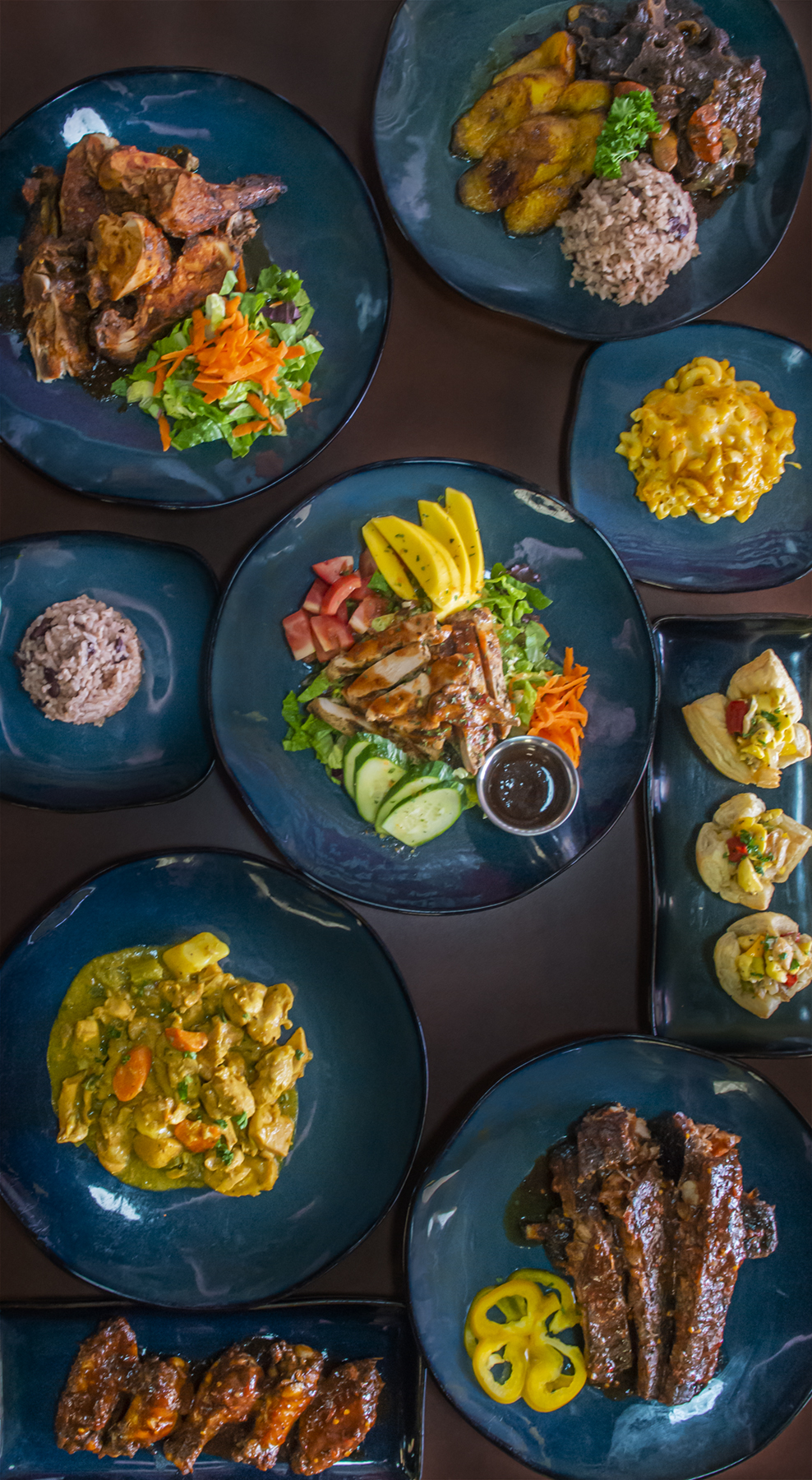
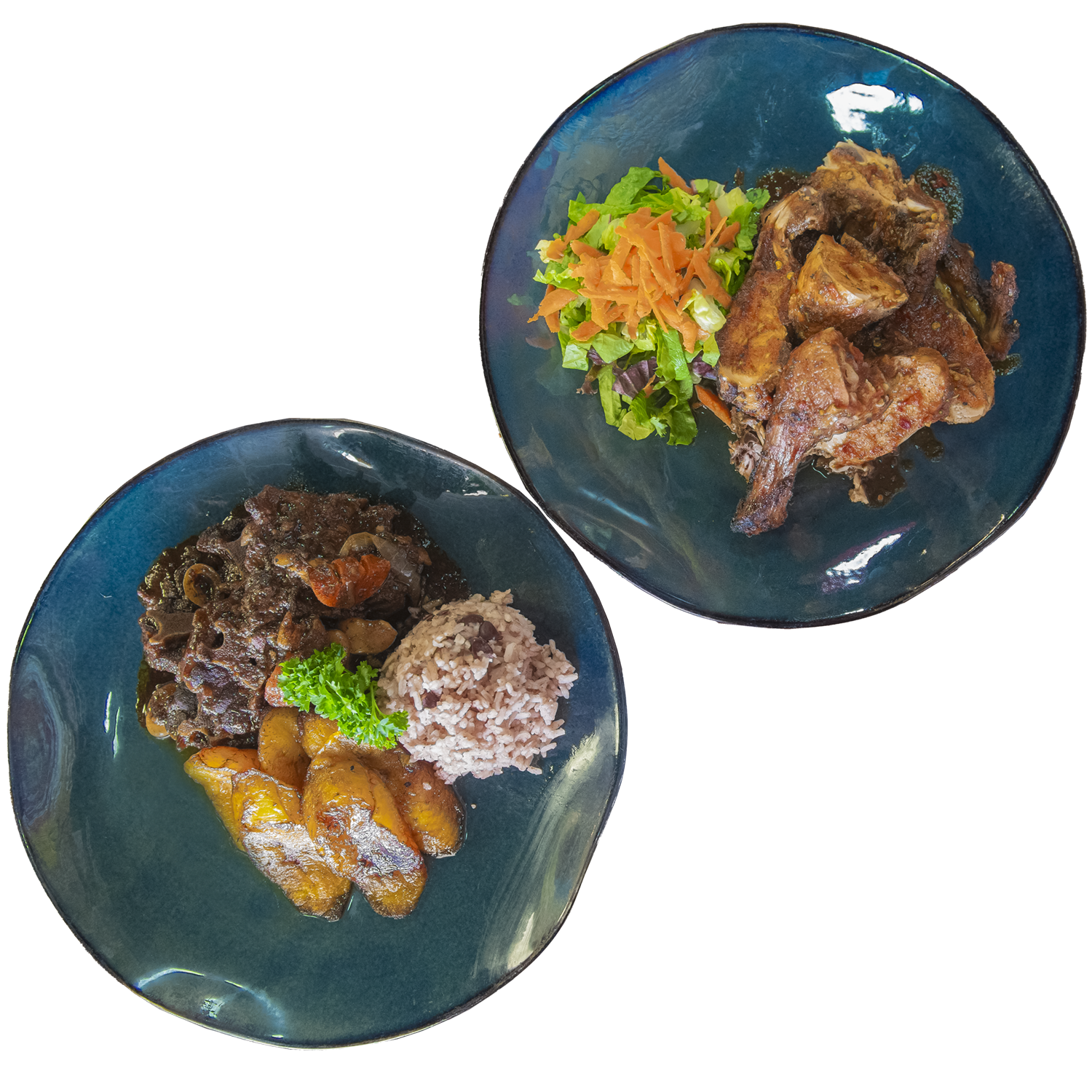
Certain dishes have come to stand in for Jamaica in the global imagination, and there are good reasons for that. Jerk, with its heat, smoke, thyme, scallion, allspice, and Scotch bonnet, is a complete statement of place. Patties are portable, affordable, and instantly recognizable. Curried goat, escovitch fish, oxtail, festival, bammy, and rice and peas have also traveled well because they deliver flavor with clarity. They announce themselves.
Yet the public menu is only part of the story. Some foods hold a quieter authority. Cornmeal porridge in the morning, made smooth and properly spiced, says something essential about comfort. Roast yam with saltfish or callaloo belongs to a grammar of everyday satisfaction that visitors sometimes overlook. Breadfruit, whether roasted over coals or turned into chips, links the island to a long history of adaptation. Soups, especially on Saturdays, carry a social force of their own. They gather households, restore the weary, and stretch ingredients without feeling sparse.
What makes these dishes remarkable is not simply flavor, but proportion. Jamaican cooks understand balance in a way that resists oversimplification. Heat should wake up the palate, not erase it. Sweetness should support, not dominate. Smoke should deepen flavor, not smother freshness. Acidity, especially in pickled vegetables or escovitch preparations, cuts richness with practical intelligence. These are not abstract principles. They show up in the plate every day.
When restaurants abroad miss the mark, it is often because they chase impact while losing proportion. Jerk becomes all fire and no fragrance. Patties become flaky but bland. Curry loses depth because it is rushed. Rice and peas arrive dry or underseasoned. This is why authenticity debates, though sometimes overused, do have substance in Jamaican food. The issue is not whether a cook can innovate. Of course they can. The issue is whether innovation still respects the internal logic of the cuisine.
Centennial thinking requires attention to place
Jamaican food is often spoken of as one national cuisine, which is true at the broad level, but local distinctions matter. Coastal communities treat fish differently from inland towns. Rural kitchens maintain techniques and ingredient combinations that urban restaurants sometimes streamline. Parish identity can influence preference, pride, and even the expected texture of a familiar dish.
Spend enough time eating across the island and these differences become impossible to ignore. A breakfast in Portland does not feel the same as breakfast in St. Elizabeth. A fish meal in Hellshire carries a different atmosphere from one served in Montego Bay, even when the species and seasonings overlap. Market availability shapes menus in practical ways. So does weather. Rain changes appetite. Heat changes holding times. Road access affects what arrives fresh and what must be preserved.
For a jamaican food centennial event, this raises an important curatorial question. Will the celebration flatten regional expression into a tourist-friendly greatest-hits menu, or will it allow the cuisine to appear in its true range? The second approach is harder, but far more honest. It asks organizers, chefs, and hosts to present food as lived culture rather than static brand identity.
A thoughtful centennial program might feature not only famous dishes, but also the stories of where they are strongest and why. It might explain why one cook insists on coconut milk from fresh grating rather than a carton, or why another swears by a particular yam variety. Those details are not fussy. They are the texture of heritage itself.
Markets, farms, and the invisible architecture of taste
No cuisine survives a hundred years on charm alone. It survives because farmers plant, fishers go out, vendors source wisely, and cooks maintain standards under pressure. The public glamour of Jamaican food often obscures the harder truth that flavor begins in supply chains.
Take scallion, thyme, ginger, and Scotch bonnet. These are not optional embellishments in many dishes. They are structural. When quality slips, the dish may still be edible, but it loses its authority. The same goes for coco, yam, chocho, pumpkin, breadfruit, and fresh fish. Good Jamaican cooking depends on ingredients that are alive to their environment. The sweetness of a ripe plantain, the starch quality of yam, the freshness of snapper, the aroma of pimento, all of this shapes the final plate more than menu language ever can.
I have seen chefs produce excellent results under difficult sourcing conditions, especially in the diaspora, but the best of them do not pretend all substitutions are equal. They know where compromise begins to alter the dish in a meaningful way. They also know that taste memory is unforgiving. Someone raised on a grandmother’s soup or a father’s jerk will recognize immediately when the backbone is missing.
This is one reason centennial celebrations should include producers, not just chefs. Heritage is sustained in fields, on boats, in packing yards, and in early-morning markets where prices rise and fall with weather and luck. Hospitality begins there too, even if guests never see it.
Tourism helped elevate the cuisine, and complicated it
Hospitality and tourism have given Jamaican food an international platform, but they have also created pressures that deserve honest discussion. Hotels and resorts introduced many travelers to the cuisine for the first time. Some did this well, employing knowledgeable cooks and using local ingredients with respect. Others reduced Jamaican food to a narrow loop of expected jamaican food centennial flavors, strong on symbolism, weak on depth.
Buffet culture in particular has often distorted perception. Dishes that should be served fresh and hot are held too long. Heat is softened for broad appeal. Menus repeat the same familiar items because they are easy to market. Guests leave believing they have eaten Jamaican food when they have really sampled a diluted resort version.
At the same time, tourism revenue has supported jobs, expanded culinary visibility, and created pathways for Jamaican chefs to gain international recognition. The trade-off is real. Visibility can strengthen a food culture, but only if the cuisine is allowed to represent itself fully. Once everything is optimized for comfort, throughput, and predictable guest reviews, the food starts losing the rough edges that make it alive.
The most successful hospitality operators tend to understand this tension. They create access without flattening complexity. They train staff to explain dishes properly. They source locally where feasible. They let guests encounter heat, texture, and regional specificity with enough context to appreciate them. Most of all, they resist the temptation to turn the cuisine into costume.
The diaspora changed the menu, but not the heartbeat
Jamaican food abroad tells another chapter of the centennial story. Migration carried recipes into London, Toronto, New York, Miami, and many other cities, where cooks rebuilt the cuisine under new constraints. Climate changed. Ingredients changed. Customer bases widened. Kitchens adapted.
The results have been mixed in the best possible sense. Some dishes stayed close to home. Others evolved. Canadian winters encouraged a different relationship to soups and stews. British high streets turned patties and jerk chicken into familiar fixtures beyond Jamaican communities. New York brought speed, scale, and competition. Across these places, Jamaican restaurants became more than businesses. They became informal community centers, cultural educators, and emotional anchors for people who missed the island.
Diaspora cooking also sharpened the question of who gets to define authenticity. A second-generation cook may use available ingredients differently from an elder raised in rural Jamaica, yet still cook with deep cultural intelligence. That does not make all changes equal, but it does mean authenticity is not frozen in time. It lives in practice, memory, and accountability to the dish.
A centennial perspective can hold both truths at once. Preservation matters. Adaptation matters too. The strongest food cultures manage both without panic.
What a meaningful centennial celebration should actually honor
If the aim is to celebrate a Jamaican food centennial with integrity, the event should resist the easy temptation to focus only on celebrity chefs, curated tasting bites, and Instagram-ready plating. Those have their place, but they cannot carry the full weight of the story.
A richer celebration would honor continuity. It would make room for elders who still cook by feel rather than measurement. It would include vendors whose food sells out by midday because the neighborhood trusts them. It would document techniques that rarely appear in formal culinary schools. It would acknowledge the labor history behind famous dishes. It would also invite younger chefs to respond, reinterpret, and build the next chapter without pretending they invented the foundation.
The strongest centennial programs usually do three things well. They feed people properly, they teach without sounding like a classroom, and they create encounters between generations that would not happen otherwise. When that balance is right, history stops feeling like a museum label and starts tasting immediate.
There is also a practical hospitality lesson here. Guests remember how an event made them feel long after they forget the decorative details. They remember whether the food was abundant, whether service felt attentive, whether the storytelling sounded truthful, whether local voices were centered, whether the room carried warmth instead of self-congratulation. Those are not soft metrics. They are the difference between a celebration and a branding exercise.
The future of Jamaican food depends on confidence, not imitation
Jamaican cuisine does not need reinvention to remain relevant. It needs investment, documentation, training, fair pay, strong agricultural support, and the confidence to present itself on its own terms. Younger chefs entering the field often face a familiar pressure. They are told, directly or indirectly, that refinement means distancing the food from its everyday forms. More garnish, less gravy. More concept, less comfort. More deconstruction, less memory.
That is usually a mistake.
The best modern Jamaican cooking I have seen does not abandon the old language. It sharpens it. It improves consistency, sourcing, and presentation without stripping away identity. A refined fish tea can still taste like fish tea. A beautifully plated escovitch can still carry the proper vinegar bite. A pastry chef can transform traditional flavors into elegant desserts without treating the originals as crude material in need of rescue.
Professional hospitality has a role to play here. Training programs should teach not only classic technique from European canons, but also the discipline embedded in Caribbean kitchens. Knife skills matter. So does knowing how long scallion can sit before it loses brightness, how to build a curry base without scorching spices, how to judge a dumpling by touch, how to hold fried fish without destroying the crust, and how to serve large groups without the seasoning collapsing under scale.
If a centennial celebration inspires anything lasting, it should be that kind of confidence. Not nostalgia without standards, and not innovation without roots. Confidence.
Where history meets hospitality
That meeting point is not abstract. It happens every time a traditional dish is served with care and full understanding. It happens when a host explains where the recipe came from, who taught it to them, and why one ingredient is non-negotiable. It happens when a dining room, whether elegant or improvised, gives guests more than a meal and less than a lecture. It lets them taste history while being looked after in the present.
Jamaican food has earned that kind of celebration because it has done more than survive. It has remained generous under pressure. It has kept flavor tied to memory. It has welcomed strangers without diluting itself beyond recognition. Across a hundred years of change, that may be its greatest achievement.
A true jamaican food centennial, then, is not just a milestone on a calendar. It is a chance to recognize that the island’s most enduring culinary traditions were built through discipline, adaptation, and hospitality practiced as daily ethic. The food tells the history, yes. But just as importantly, the act of serving it tells us what kind of culture Jamaica has chosen to be: expressive, resilient, exacting about taste, and remarkably open-hearted.
Reggae Pot Jamaican Grill
Address: 7562 S University Blvd C, Centennial, CO 80122
Phone number: +13039975623
FAQ About Jamaican Food Centennial
What is typical Jamaican food?
Typical Jamaican food features bold, vibrant flavors created by blending African, Taino, European, and Asian influences.
What is a famous Jamaican dish?
The most famous Jamaican dish is Ackee and Saltfish, which is the national dish of Jamaica.
What are the top 10 foods to eat in Jamaica?
AI Overview The top 10 traditional foods to eat in Jamaica are bold, flavorful dishes that mix local ingredients with global influences.